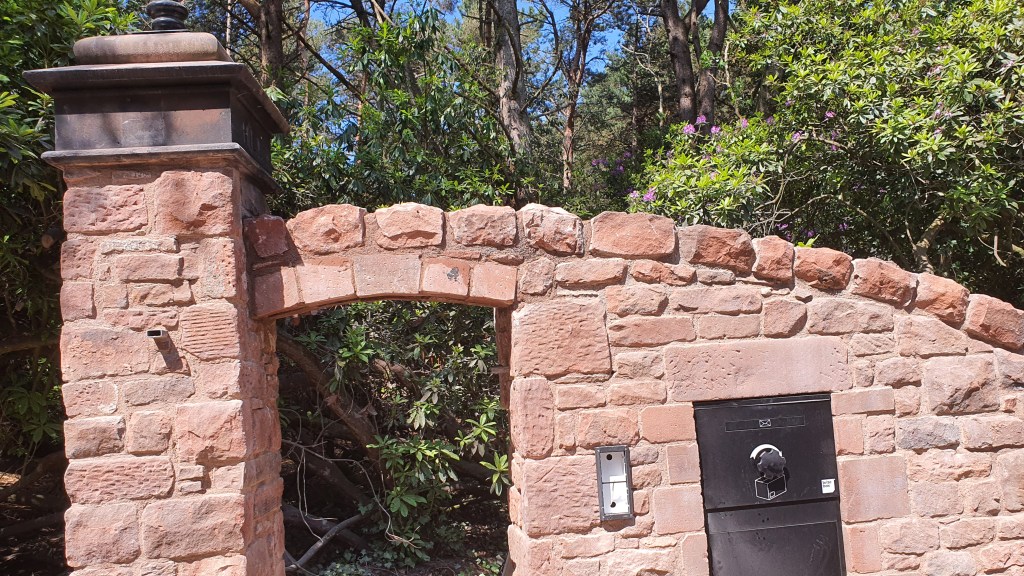
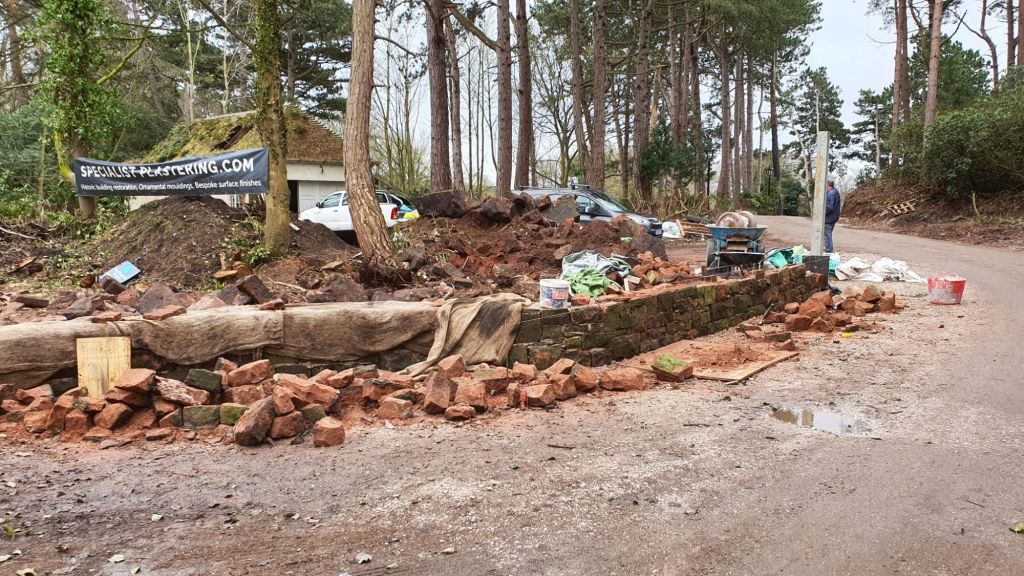
Nestled within one of the Wirral’s most historically significant conservation areas, this remarkable project saw us rebuild a collapsed and deteriorating sandstone boundary wall and entrance from the ground up — using traditional methods, hot lime mortar, and every piece of stone recovered from the original structure.
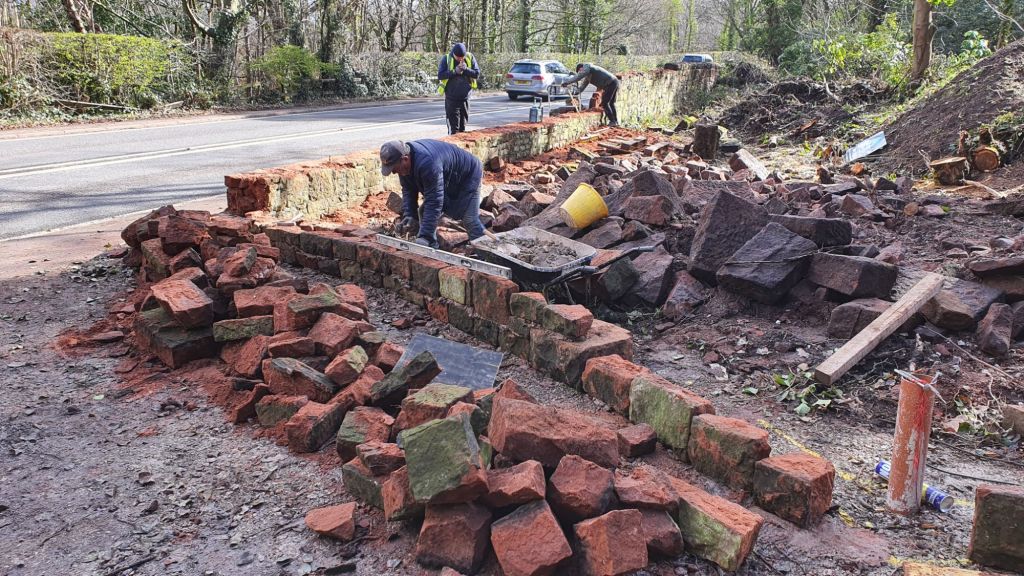
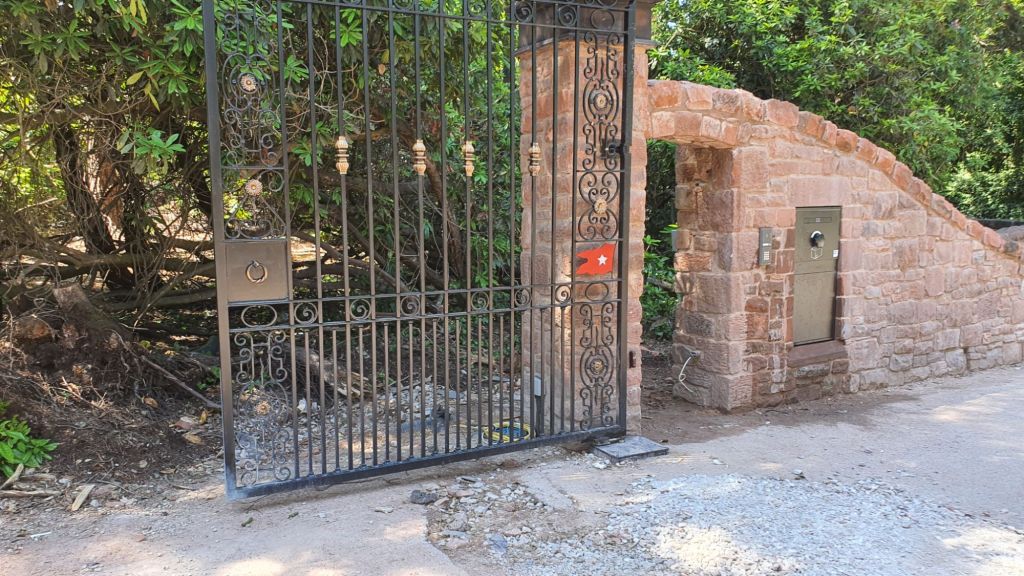
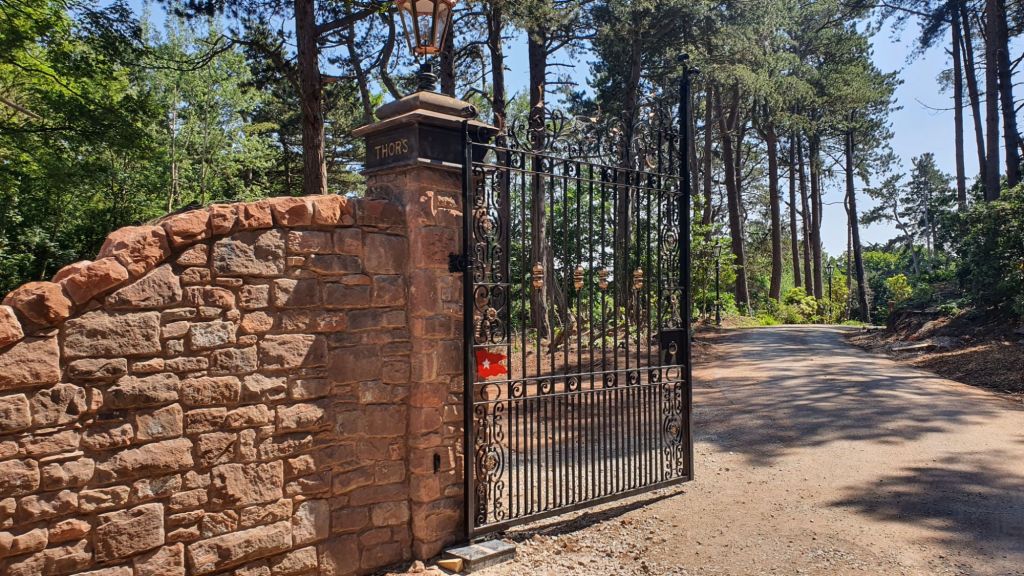
The site carries extraordinary heritage. This land was once part of the estate of Thomas Henry Ismay, founder of the White Star Line — the shipping company whose fleet included the ill-fated RMS Titanic. Ismay built his grand country mansion, Dawpool, here in Thurstaston in the 1880s, and the ornate iron entrance gates on this project still bear the red and white burgee flag that served as the White Star Line’s iconic logo. Working on a site so deeply woven into maritime and local history added a profound sense of responsibility to every stone we laid.
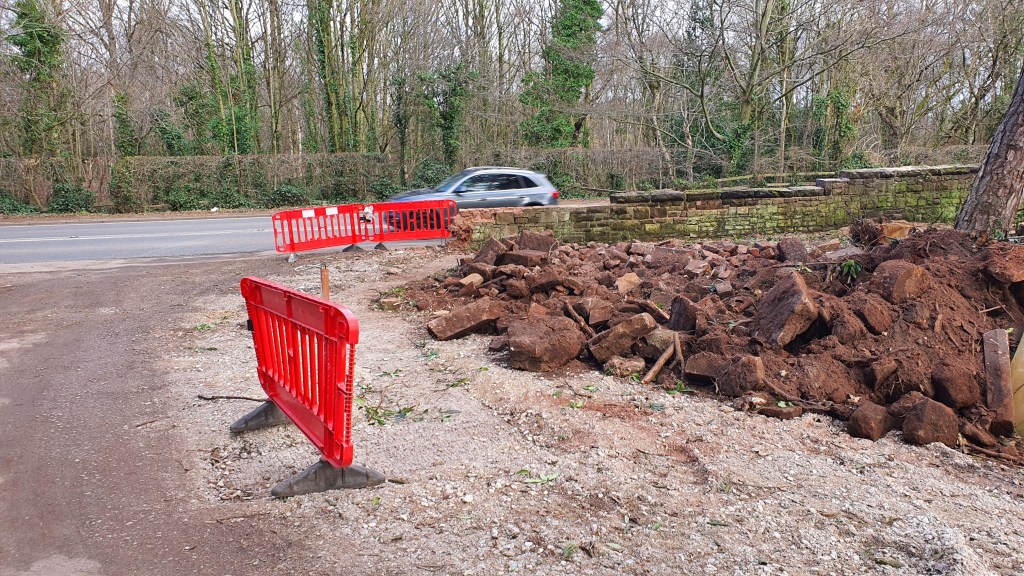
Salvaging Every Stone
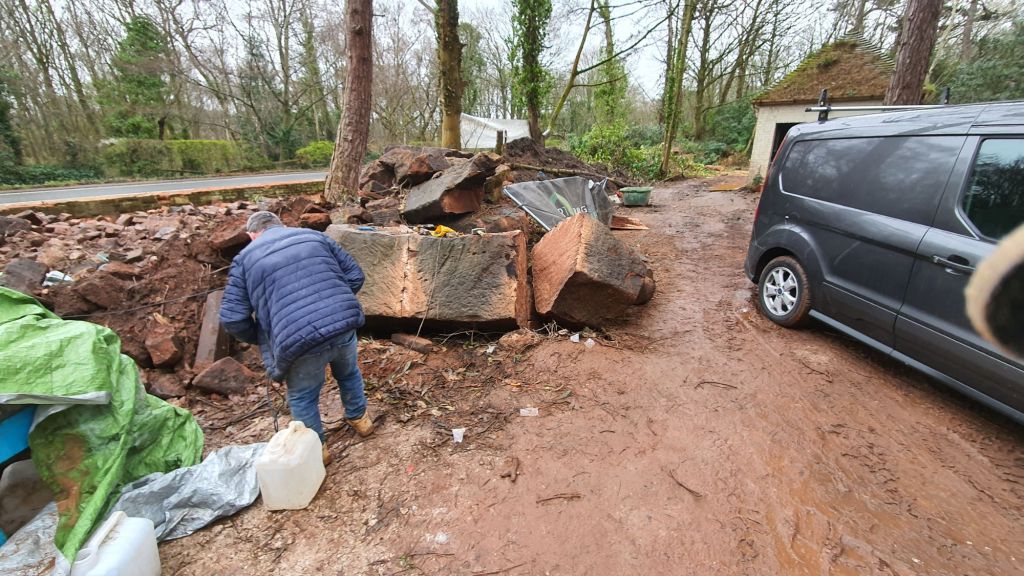
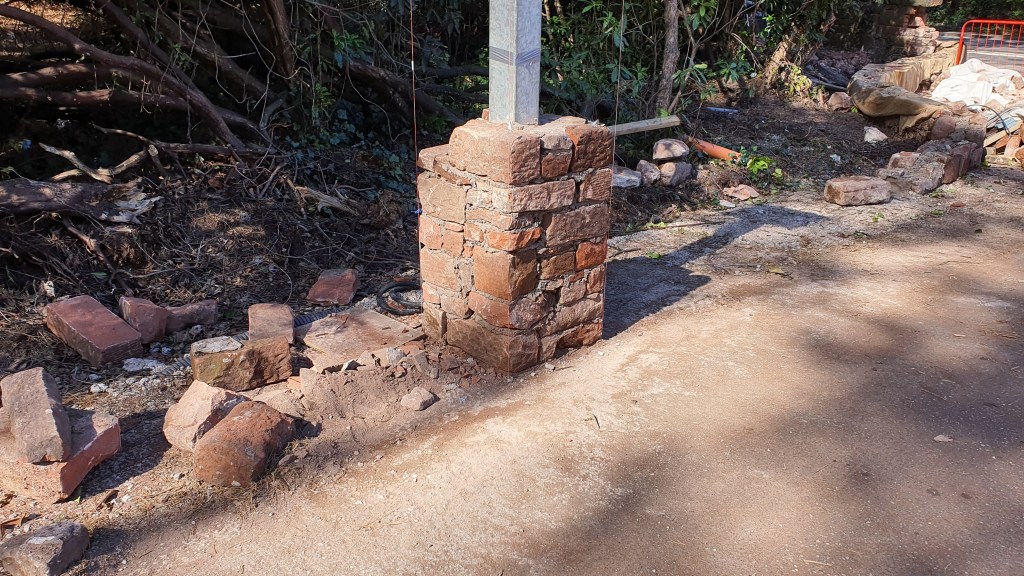
One of the guiding principles of this project was sustainability and respect for the original fabric of the site. Rather than bringing in new stone, we committed to recycling every usable piece of sandstone from the collapsed structure. The existing wall had fallen in places and been badly disrupted, leaving a mixture of cut ashlar blocks, rubble stone and enormous raw boulders from around the estate.
Splitting Stone the Traditional Way: Plug & Feather
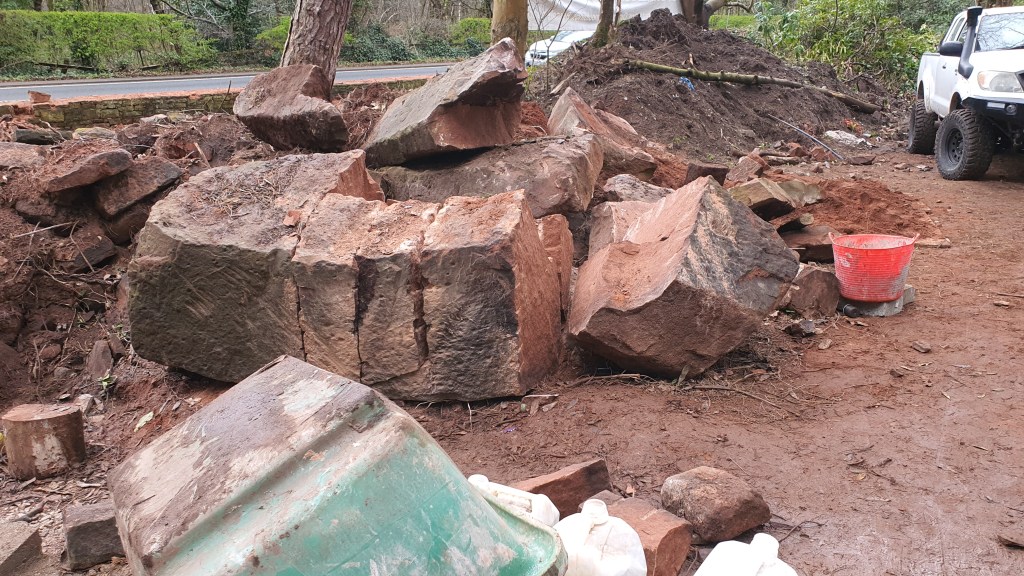
Some of the boulders recovered from the site were simply too large to use as wall stones in their original form. Rather than waste them or resort to mechanical cutting, we used the time-honoured plug and feather technique to split them down to usable sizes.
This ancient method involves drilling a series of holes along the desired split line, then inserting steel wedges (the “plugs”) flanked by tapered steel shims (the “feathers”). As the plugs are driven in progressively, the stone cleaves cleanly along the grain — leaving a natural face that blends seamlessly with the original coursed stonework. It’s a craft that has changed little in hundreds of years, and its results are unmistakable.
The Rebuild Begins: Hot Lime Mortar Throughout
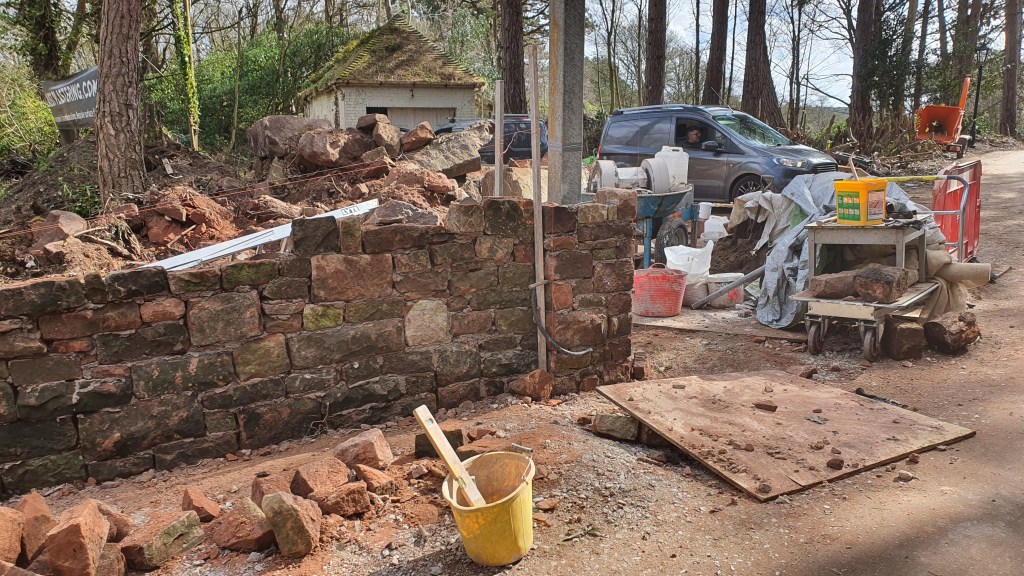
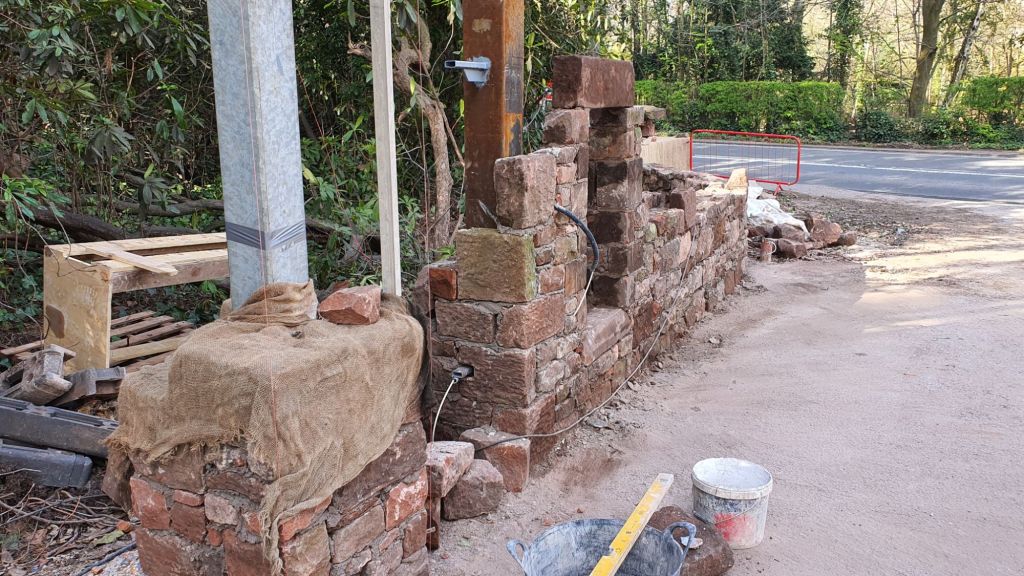
As a designated conservation area, the use of appropriate materials here was not just good practice — it was essential. We used hot lime mortar throughout the entire rebuild. Unlike modern cement, hot lime is breathable, flexible, and forgiving: it moves slightly with the structure, allowing moisture to escape rather than becoming trapped behind an impermeable skin. It is the only appropriate mortar for historic sandstone, which is itself a naturally porous and breathable material.
The mortar was mixed using traditional techniques, with the lime putty produced from quicklime slaked on site. The consistency and workability of a well-made hot lime mix is something no bagged product can match — and the end result, as the lime carbonates and hardens over time, will outlast anything a modern mix could achieve.
Building the Gate Piers & Entrance Structure
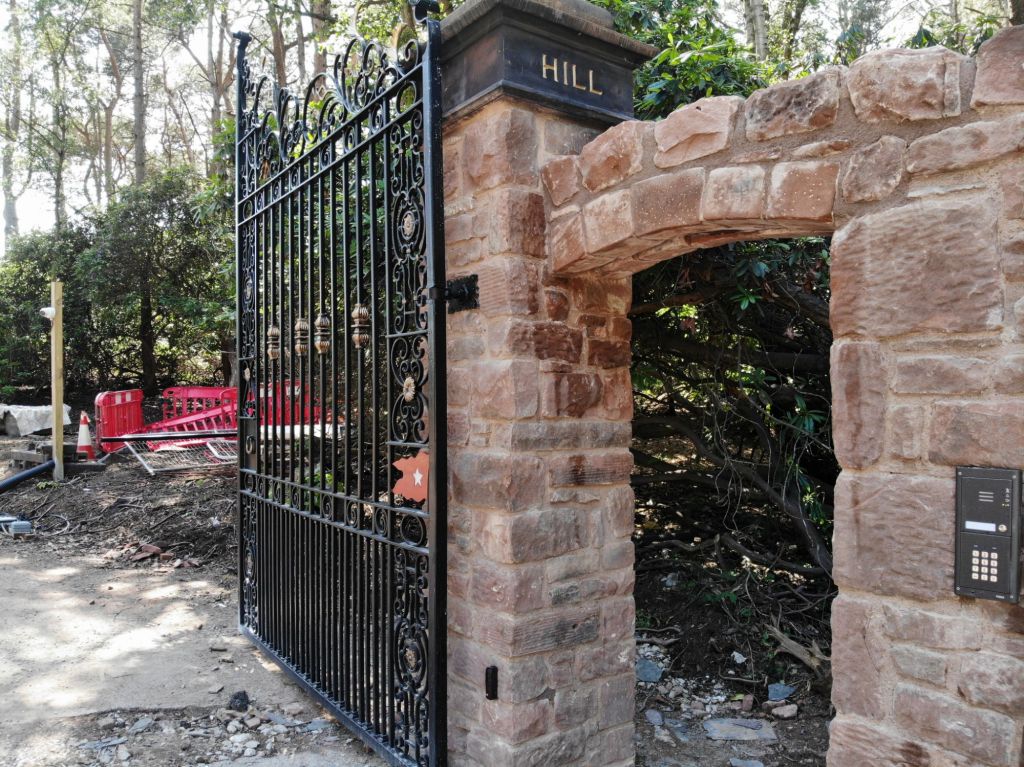
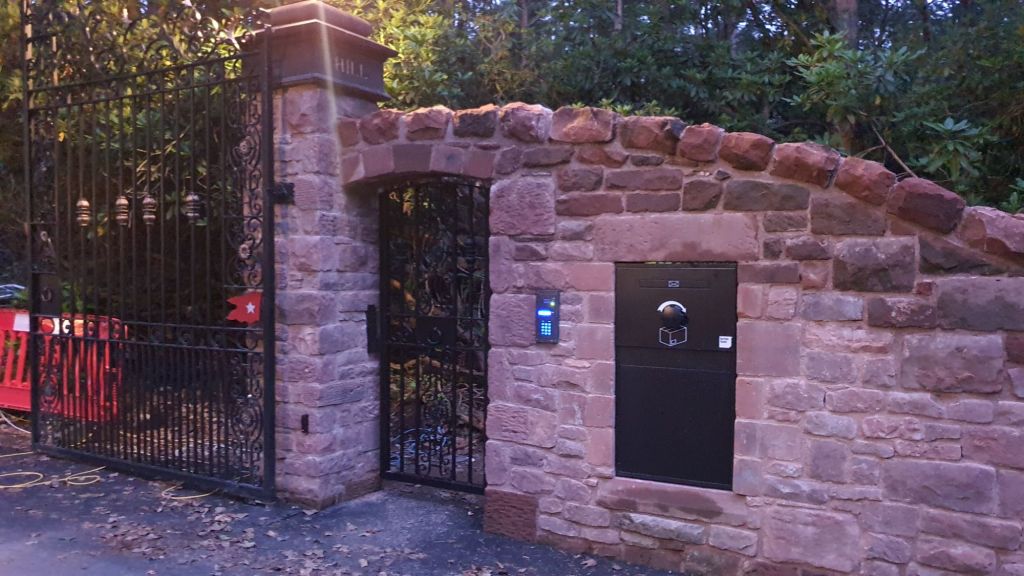
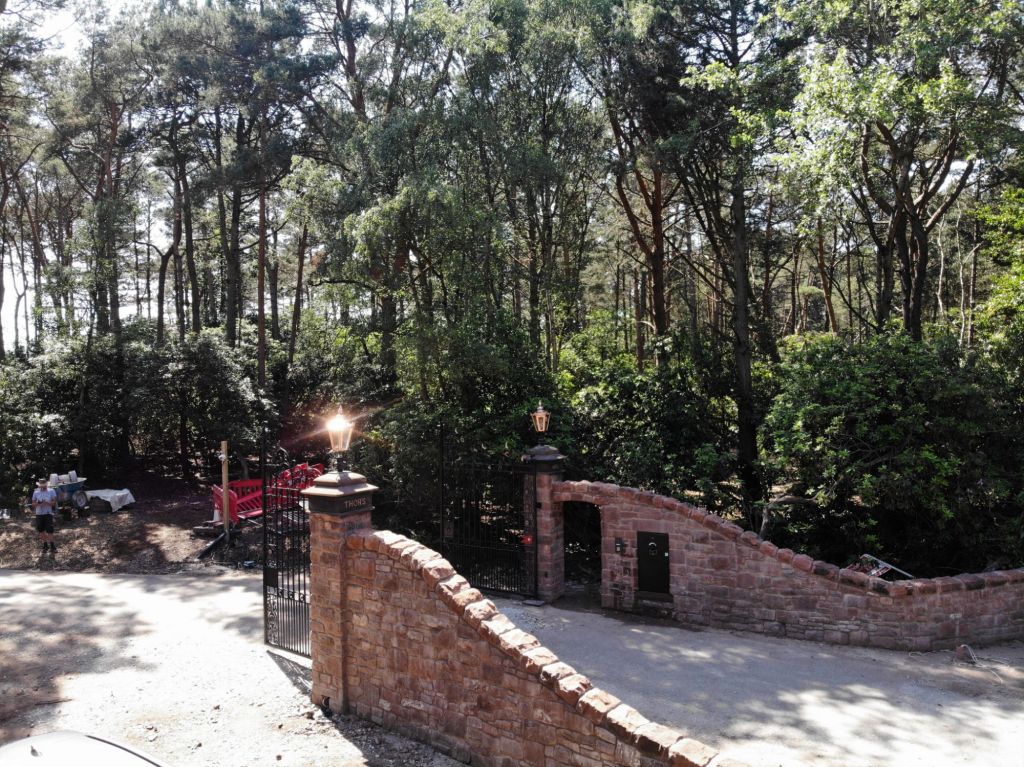
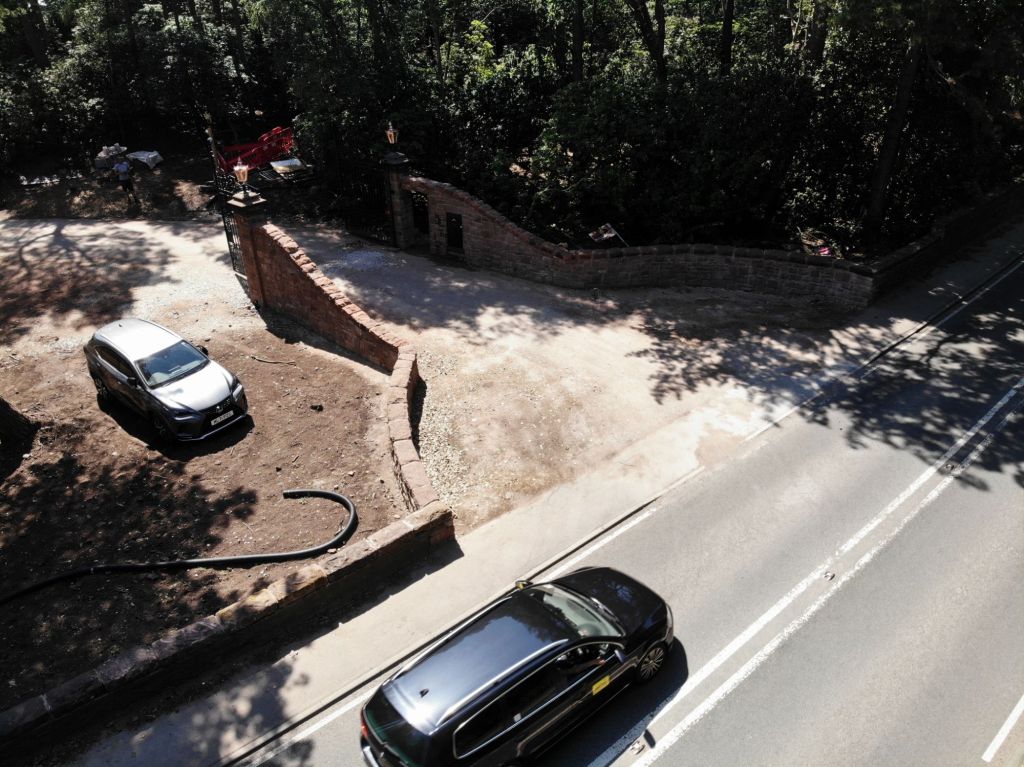
The entrance required the construction of substantial sandstone gate piers, a pedestrian arch with integrated letterbox alcove, and curving return walls — all built to match the character and material of the original structure. The piers needed to be strong enough to carry large ornamental iron gates, which meant careful structural planning as well as traditional craft.
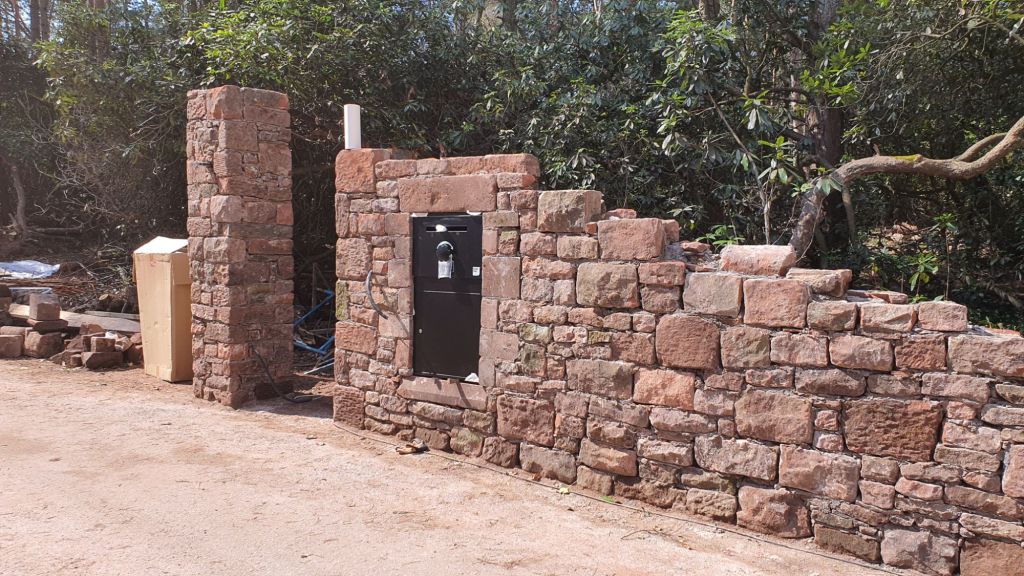
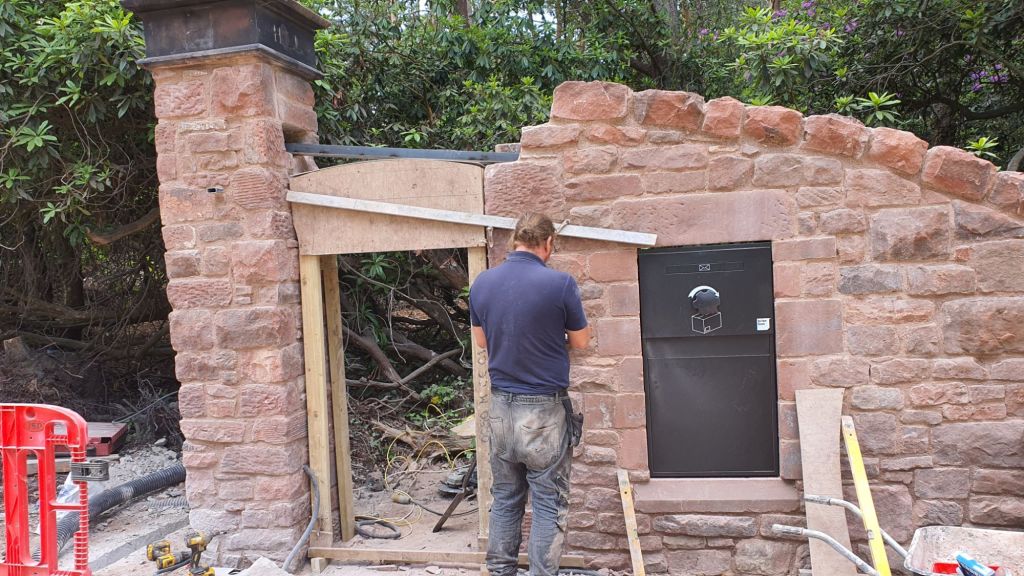
The arch over the pedestrian gate was built entirely from reclaimed sandstone, with each stone hand-selected and shaped to fit. The close-up detail of the finished stonework around the arch shows the quality of the lime jointing and the care taken in selecting and positioning each piece.
Setting the Coping & Gate Lanterns
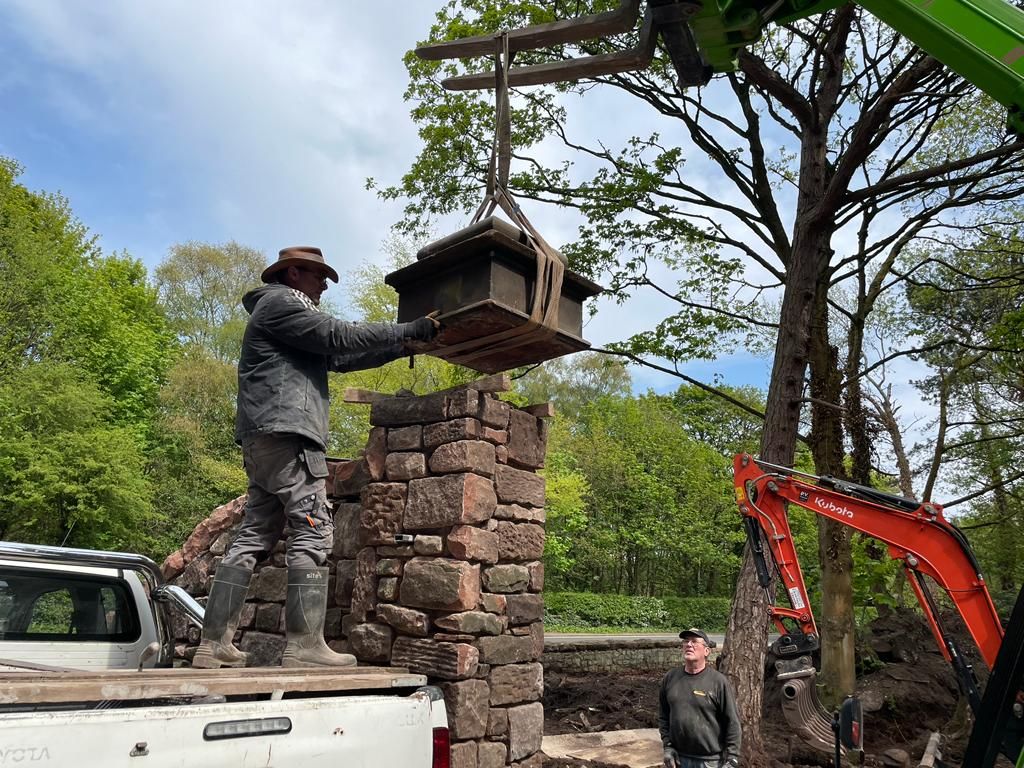
With the main structure complete, the coping stones were set to cap the wall and piers, and the ornamental cast iron gate lanterns were craned into position atop the piers. Seeing the lanterns lifted into place marked a real milestone — a moment when the project came together visually and you could begin to appreciate the scale and grandeur of what had been achieved.
Installing the Gates & Letterbox
With the masonry complete, the ornamental ironwork gates and the integrated letterbox and intercom panel were installed into the entrance structure. The gates themselves are a remarkable piece of decorative ironwork — and that distinctive red burgee flag with a white star hanging from the gate is no coincidence. It is a deliberate nod to the White Star Line, whose founder Thomas Henry Ismay once called this land home.
The Finished Entrance
The drone photograph taken towards the end of the project gives a wonderful sense of the scale of the work — the sweeping curved return walls, the twin piers, the pedestrian arch, all in beautifully coursed reclaimed sandstone. And the evening shot of the completed entrance, with the lanterns lit and the gates in place, speaks for itself.
A Conservation Area Project Done Right
This project is a testament to what is possible when traditional craft skills, appropriate materials, and genuine respect for heritage come together. Every stone in these walls was salvaged from the original structure. Every joint was made with hot lime. Every technique — from the plug and feather splitting to the arch construction — was drawn from the same traditions that built the original wall, probably well over a century ago.
Working within a conservation area, and on a site of such historical significance, demands nothing less. We are proud to have played a part in restoring a corner of Thurstaston that Thomas Henry Ismay himself would have known — and to have done so in a way that will stand for generations to come.
Specialist Plastering are expert craftsmen based in Thurstaston, Wirral, specialising in lime plastering, traditional stonework, historic building conservation and heritage restoration across Wirral, Cheshire, the North West and beyond. Contact us to discuss your project.

 Specialist Plastering
Leave a comment